URL Encoder Spellmistake: What It Means, Why It Happens, and How to Fix It Properly

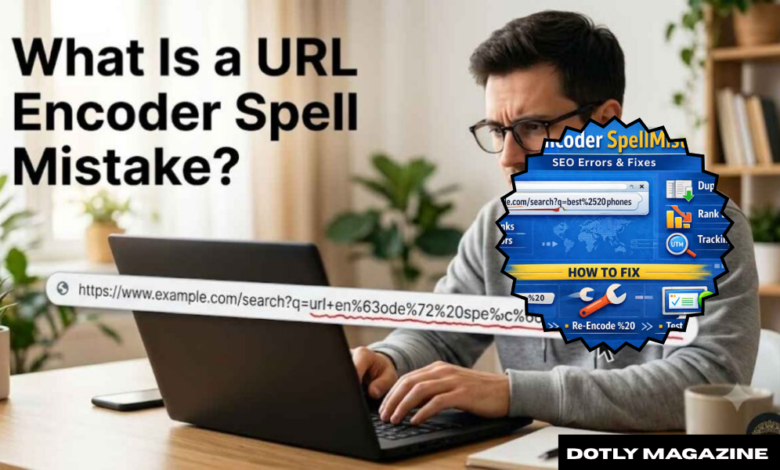
A url encoder spellmistake usually happens when someone searches for a URL encoder tool, types the term incorrectly, or faces a technical issue caused by wrongly encoded characters inside a web address. URL encoding is important because special characters, spaces, symbols, and non-English letters can break links if they are not converted into a safe web format. In simple terms, URL encoding changes unsafe characters into readable code patterns, and MDN explains that encodeURIComponent() replaces characters with escape sequences based on UTF-8 encoding.
Quick Overview
| Topic | Details |
|---|---|
| Main Keyword | url encoder spellmistake |
| Correct Related Term | URL encoder / URL encoding |
| Common Issue | Misspelled search term or wrongly encoded URL |
| Used For | Safe URLs, query strings, tracking links, forms, redirects |
| Common Example | Space becomes %20 |
| Main Users | Bloggers, developers, SEO experts, marketers, website owners |
What Does URL Encoder Spellmistake Mean?
The phrase url encoder spellmistake is not a standard technical term, but it is easy to understand why people search for it. It can mean two things.
First, it may simply be a spelling mistake. A user might want to search for “URL encoder spelling mistake,” “URL encoder,” “URL encoding,” or “URL encode online,” but they type url encoder spellmistake instead.
Second, it can describe a real website problem where a URL becomes broken because characters were encoded incorrectly. For example, a space, question mark, ampersand, slash, or symbol may be placed in the wrong part of a URL. When that happens, the link may stop working, redirect incorrectly, or show a 404 error.
So, while the phrase looks unusual, the topic behind it is useful. It connects spelling errors, URL structure, encoding mistakes, and website troubleshooting.
What Is a URL Encoder?
A URL encoder is a tool or function that changes unsafe characters into a format that browsers, servers, and search engines can understand. Web addresses cannot always handle spaces, symbols, or special characters in their raw form.
For example:
best shoes under $50
After encoding, it may become:
best%20shoes%20under%20%2450
Here, the space becomes %20, and the dollar sign becomes %24.
This process keeps the URL clean and prevents confusion. Without encoding, a browser may misunderstand part of the URL as a command, separator, or broken path.
Why URL Encoding Matters
URL encoding matters because a small character can change how a link behaves. For example, the & symbol is often used to separate query parameters in URLs. If you want to include & as part of a search value, it must be encoded. Otherwise, the system may think a new parameter has started.
Example of a risky URL:
example.com/search?query=Tom & Jerry
Better encoded version:
example.com/search?query=Tom%20%26%20Jerry
In this example, %26 represents the ampersand. This tells the browser that the ampersand is part of the search term, not a separator.
This is why developers, SEO experts, affiliate marketers, and website owners use URL encoding when creating links.
Common URL Encoder Spellmistake Problems
There are many mistakes people make when working with URL encoders. Some are spelling-related, while others are technical.
One common issue is typing “url encoder” incorrectly while searching for a tool. People may search for “url enocder,” “url encorder,” “url encoder spellmistake,” or “url encoader.” Search engines usually understand the intent, but the wrong spelling can still create confusion.
Another common problem is encoding a full URL when only one part should be encoded. This can break the structure of the link.
For example, this full URL:
https://example.com/page?name=John Smith
If encoded completely, it may turn into:
https%3A%2F%2Fexample.com%2Fpage%3Fname%3DJohn%20Smith
That encoded version is useful only if you are placing the full URL inside another URL as a parameter. It is not useful as a normal clickable link.
URL Encoding vs URL Decoding
URL encoding and URL decoding are opposite processes.
URL encoding changes unsafe text into URL-safe code.
Example:
hello world
Encoded:
hello%20world
URL decoding changes encoded text back into normal readable text.
Example:
hello%20world
Decoded:
hello world
A URL encoder helps create safe links, while a URL decoder helps read or debug them. If you copy a long tracking URL from an ad platform or analytics tool, decoding it can help you understand what each part means.
Most Common Encoded Characters
Some characters appear again and again in encoded URLs. Here are a few common examples:
| Character | Encoded Form |
|---|---|
| Space | %20 |
| ! | %21 |
| # | %23 |
| $ | %24 |
| & | %26 |
| / | %2F |
| : | %3A |
| = | %3D |
| ? | %3F |
| @ | %40 |
These codes are not random. They help browsers and servers understand which characters are part of the content and which characters are part of the URL structure.
Why Spaces Become %20
One of the most common URL encoder questions is why spaces become %20. A space is not safe inside a URL because it can create confusion. A browser may replace it automatically, but relying on automatic changes is not always a good idea.
For example:
example.com/best mobile phones
A safer version is:
example.com/best%20mobile%20phones
However, in SEO-friendly URLs, spaces are usually replaced with hyphens instead:
example.com/best-mobile-phones
That is better for readability, SEO, and user experience.
URL Encoder Mistakes in SEO
For SEO, URL structure matters a lot. A clean URL is easier for users to read and easier for search engines to understand. A poorly encoded URL can look messy, suspicious, or difficult to share.
Bad example:
example.com/blog/url%20encoder%20spellmistake%20guide
Better example:
example.com/blog/url-encoder-spellmistake-guide
Both may work, but the second one looks cleaner. It is also easier to remember and more suitable for a blog post.
SEO-friendly URLs usually use lowercase letters, hyphens, and short descriptive words. Encoding is still important for query strings and technical URLs, but normal article slugs should be simple and readable.
URL Encoder Spellmistake in Blog Titles
If you are writing an article around the keyword url encoder spellmistake, you may wonder whether to correct the spelling or keep it exact. For SEO, it is often smart to keep the focus keyword exactly as users search it, especially in the title, introduction, and one or two headings.
However, you should also explain the correct meaning. That way, the article can rank for the misspelled phrase while still helping readers understand the proper concept.
For example, you can use a title like:
URL Encoder Spellmistake: Correct Meaning, Common Errors, and Easy Fixes
This keeps the keyword intact but makes the article sound natural.
How to Fix a URL Encoder Spellmistake
Fixing a URL encoder spellmistake depends on the problem.
If the issue is only spelling, use the correct terms:
URL encoderURL encodingURL encodeURL decoderpercent encoding
If the issue is a broken URL, check which part is wrong. Look for spaces, ampersands, question marks, slashes, equal signs, or special characters. These are the areas where encoding mistakes usually happen.
If the URL is being used inside another URL, encode the full URL as a value. If you are only building a normal webpage link, do not encode the entire link.
Example of Correct URL Encoding
Suppose you want to create a search link for this phrase:
url encoder spellmistake guide
The raw version might look like this:
example.com/search?q=url encoder spellmistake guide
The encoded version should look like this:
example.com/search?q=url%20encoder%20spellmistake%20guide
This keeps the search phrase together as one query value.
Now imagine the search phrase contains an ampersand:
tools & tips
Without encoding:
example.com/search?q=tools & tips
Better version:
example.com/search?q=tools%20%26%20tips
The encoded ampersand prevents the URL from breaking.
Difference Between encodeURI and encodeURIComponent
In JavaScript, two common methods are encodeURI() and encodeURIComponent(). They sound similar, but they are not used the same way.
encodeURI() is used when you want to encode a full URL but keep its structure mostly intact.
encodeURIComponent() is used when you want to encode a smaller part of a URL, such as a query value.
For example, if you are encoding only a search term, encodeURIComponent() is usually the better choice. If you encode a complete URL with the wrong method, you may break important characters like ?, =, and &.
This is one of the most common technical URL encoder mistakes.
URL Encoder for Website Owners
Website owners do not always need to understand every technical detail of URL encoding, but they should know the basics. Broken URLs can hurt user experience, reduce clicks, and create crawl problems.
If you run a blog, news site, affiliate website, or magazine-style website, keep your article slugs clean. Use short words, lowercase letters, and hyphens. Avoid unnecessary symbols in URLs.
For example:
Bad URL:
dotlymagazine.co.uk/url encoder spellmistake?new article=yes
Better URL:
dotlymagazine.co.uk/url-encoder-spellmistake
The second version is cleaner and more professional.
URL Encoder in Forms and Tracking Links
URL encoding is also important in forms and tracking links. When users submit forms, their values often become part of a URL or request. If someone enters symbols, emojis, or spaces, encoding helps send that data safely.
Marketing links also use URL parameters. UTM tracking links often contain campaign names, keywords, sources, and mediums. If those values include spaces or symbols, they should be encoded correctly.
Example:
utm_campaign=spring sale
Better:
utm_campaign=spring%20sale
Many tools encode these automatically, but manual mistakes still happen when people edit links by hand.
Best Practices for Clean URLs
To avoid URL encoder spellmistake issues, follow simple best practices.
Use hyphens instead of spaces in article URLs. Keep URLs short and descriptive. Avoid unnecessary symbols in slugs. Use lowercase letters where possible. Encode query values properly. Do not encode an entire URL unless you are placing it inside another URL. Test links before publishing them.
Also, avoid copying broken URLs from messaging apps, spreadsheets, or documents without checking them. Sometimes a link gets split, shortened, or changed during copying.
Why URL Encoder Tools Are Useful
Online URL encoder tools are useful because they save time. You paste normal text, click encode, and get a URL-safe version. You can also decode a messy URL to understand what it contains.
These tools are helpful for bloggers, developers, SEO specialists, students, and marketers. Even if you do not write code, a URL encoder can help you fix broken links, create safe search URLs, and understand tracking links.
However, you should be careful when pasting sensitive links into random tools. If a URL contains private tokens, login details, or secret keys, avoid using public tools. Use a trusted local method or built-in browser/developer tools instead.
Is URL Encoder Spellmistake Bad for SEO?
The keyword url encoder spellmistake itself is not bad for SEO. In fact, misspelled keywords sometimes attract search traffic because many users type imperfect queries. The important thing is how you use the keyword.
Do not stuff the phrase unnaturally. Use it in the title, first paragraph, one heading, and a few natural places in the article. Then explain the correct term clearly.
A good article should help both types of readers: people who typed the phrase by mistake and people who are actually trying to solve a URL encoding problem.
How to Check If a URL Is Encoded Correctly
You can check a URL manually by looking for broken spaces, strange symbols, or repeated percent signs. You can also paste it into a browser and see whether it opens correctly.
If the URL contains query parameters, check whether each parameter is separated properly. A normal query string often starts with ? and uses & between parameters.
Example:
example.com/page?name=John&city=London
If a value itself contains &, that ampersand should be encoded as %26.
A properly encoded URL should not look randomly broken. It may include percent codes, but the structure should still make sense.
FAQs About URL Encoder Spellmistake
What is url encoder spellmistake?
url encoder spellmistake usually refers to a misspelled search phrase related to URL encoders, or a mistake caused by incorrect URL encoding. It can also mean a broken link created by unsafe characters in a URL.
What is the correct spelling of url encoder?
The correct spelling is URL encoder. Related terms include URL encoding, URL encode, URL decoder, and percent encoding.
Why do URLs need encoding?
URLs need encoding because some characters have special meanings in web addresses. Encoding prevents browsers and servers from misunderstanding those characters.
What does %20 mean in a URL?
%20 means a space. Since spaces are not ideal inside URLs, they are often converted into %20 during encoding.
Is URL encoding important for SEO?
Yes, URL encoding can affect SEO indirectly. Clean and properly structured URLs improve readability, crawling, sharing, and user experience.
Should I use hyphens or %20 in blog post URLs?
For blog post slugs, hyphens are usually better. For example, use url-encoder-spellmistake instead of url%20encoder%20spellmistake.
Can wrong URL encoding break a link?
Yes. If characters like &, ?, /, or = are used incorrectly, the browser or server may read the URL in the wrong way.
What is the difference between encoding and decoding?
Encoding changes normal text into URL-safe format. Decoding changes URL-safe encoded text back into normal readable text.
Is url encoder spellmistake a real technical term?
No, it is not a formal technical term. It is better understood as a search typo or a phrase describing mistakes related to URL encoding.
How can I avoid URL encoder mistakes?
Use clean slugs, encode only the correct part of the URL, avoid unnecessary symbols, test links before publishing, and use trusted URL encoder tools when needed.
Final Thoughts
The phrase url encoder spellmistake may look like a small typo, but it points to an important web concept. URL encoding helps links work correctly by converting unsafe characters into a safe format. Whether you are a blogger, SEO expert, developer, or website owner, understanding basic URL encoding can help you avoid broken links, messy slugs, and tracking errors.
For normal blog posts, keep URLs simple and readable. For query strings, forms, tracking links, and technical parameters, use proper URL encoding. A small mistake in a URL can create a big problem, but with the right approach, it is easy to fix.
Visit for more info: dotlymagazine.co.uk