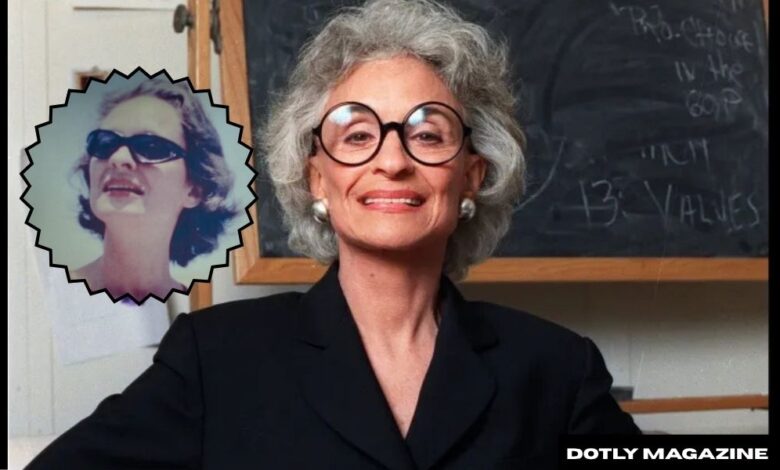
Frances Lear was an American publisher, writer, feminist, and media figure best remembered as the founder of Lear’s, a magazine created for mature women who felt ignored by mainstream media. Born Frances Loeb, she became widely known through her marriage to television producer Norman Lear, but her own life was defined by activism, reinvention, emotional honesty, and her belief that women over 45 deserved visibility, style, power, and a public voice. (Frances Lear)
| Quick Bio | Details |
|---|---|
| Full Name | Frances Lear |
| Birth Name | Evelyn Loeb |
| Adoptive Name | Frances Loeb |
| Date of Birth | July 14, 1923 |
| Birthplace | Hudson, New York, United States |
| Date of Death | September 30, 1996 |
| Place of Death | New York City, New York |
| Age at Death | 73 years old |
| Known For | Founder of Lear’s magazine |
| Former Husband | Norman Lear |
| Children | Kate Lear and Maggie Lear |
| Profession | Publisher, editor, writer, feminist activist |
| Famous Magazine | Lear’s, aimed at women over 45 |
Who Was Frances Lear?
Frances Lear was one of the most fascinating women in American media history. Many people first recognize her name because she was once married to Norman Lear, the legendary creator and producer behind shows such as All in the Family, Maude, The Jeffersons, and Good Times. However, reducing Frances to “Norman Lear’s ex-wife” would miss the real story.
She was a woman who transformed pain, divorce, money, and public attention into a media experiment that challenged how American magazines treated older women. After receiving a large divorce settlement, she used part of that money to launch Lear’s, a magazine aimed at women over 45. At the time, this was a bold idea because most women’s magazines were still heavily focused on youth, beauty, marriage, motherhood, fashion, and advertising-friendly lifestyle content.
Frances wanted something different. She wanted a magazine for women with experience, opinions, careers, emotional histories, political interests, and second acts. Her famous magazine slogan, “For the woman who wasn’t born yesterday,” captured that mission clearly.
Early Life of Frances Lear
Frances Lear’s early life was complicated and emotionally difficult. She was born on July 14, 1923, in Hudson, New York. According to public biographical records, she was born as Evelyn to an unmarried mother and was later placed in a Jewish orphanage. She was adopted as a baby by Aline and Herbert Loeb, who renamed her Frances.
Her childhood was marked by both privilege and trauma. Her adoptive family lived in Larchmont, New York, but her father’s financial failure during the Great Depression led to tragedy. Public biographies state that Herbert Loeb died by suicide after losing his business. Frances later wrote about painful experiences in her childhood, including abuse by her stepfather, in her autobiography.
These early experiences shaped much of Frances Lear’s later life. She became a woman who cared deeply about power, vulnerability, gender, family, emotional survival, and the ways women are silenced. Her activism and publishing work cannot be separated from the hardships she survived.
Education and Early Personality
Frances Lear attended the Mary A. Burnham School for Girls in Northampton, Massachusetts. Public accounts describe her as energetic, intelligent, and involved in school life. She reportedly captained a basketball team and edited her high school yearbook, early signs of her confidence and leadership style.
This early combination of athletic energy, editorial interest, and social sharpness later appeared in her adult life. Frances was not a quiet background figure. She was expressive, emotional, ambitious, and often intense. People who wrote about her often described her as mercurial, dramatic, brilliant, difficult, stylish, and unforgettable.
Those qualities helped her create attention, but they also made her controversial. Frances Lear was not built to be a polite footnote in someone else’s biography. She wanted to speak, argue, publish, organize, and be seen.
Frances Lear Before Norman Lear
Before becoming publicly connected to Norman Lear, Frances had already lived several chapters. She worked as a buyer for women’s sportswear at Lord & Taylor, which gave her experience in fashion, retail, taste, and women’s consumer culture.
She was also married and divorced twice before marrying Norman Lear. Public sources identify her earlier marriages as being to Arnold Peter Weiss and Morton Kaufman or Kaufmann. These early marriages are less widely discussed than her marriage to Norman Lear, but they show that her adult life had already included personal reinvention before she entered the world of Hollywood and television.
Her early career in fashion retail also helps explain her later instincts as a magazine founder. She understood women as consumers, but she also believed they were more than consumers. That tension became central to Lear’s, which tried to combine elegance, politics, culture, and serious women’s issues.
Marriage to Norman Lear
Frances Lear married Norman Lear in 1956. Their marriage lasted for nearly three decades before ending in divorce in 1985. During that time, Norman became one of the most influential television producers in American history, while Frances became part of the social, political, and cultural world surrounding his success.
The couple had two daughters together, Kate Lear and Maggie Lear. Public biographies of both Frances and Norman Lear confirm that Kate and Maggie were born from their marriage.
Frances’s marriage to Norman Lear placed her close to the center of American television culture during a period of enormous social change. Norman’s shows tackled race, class, feminism, politics, marriage, and generational conflict. Frances herself was politically aware, outspoken, and deeply connected to feminist causes, so it is not surprising that many people later connected her personality to the kind of strong women who appeared in Norman Lear’s work.
Was Frances Lear the Inspiration for Maude?
One of the most interesting claims about Frances Lear is that she helped inspire the character Maude Findlay, played by Bea Arthur in the sitcom Maude. The show became famous for its outspoken feminist lead character, and public biographical sources note that Frances Lear has been acknowledged as an inspiration for Maude.
This connection makes sense. Maude was bold, opinionated, liberal, emotional, and unafraid to challenge people. Frances Lear shared many of those qualities in real life. She was not the kind of woman who quietly accepted the limits placed on her by society.
Still, it is important to understand that Maude was a fictional character, not a direct copy. Frances was one influence among many, but the comparison remains powerful because it shows how much her personality and politics reflected the feminist energy of the era.
Frances Lear and Feminism
Frances Lear became increasingly involved in feminist activism during her adult life. She supported the women’s movement, civil rights, mental-health awareness, and political causes. Public biographies note her work with the National Organization for Women in support of the Equal Rights Amendment.
Her feminism was personal as well as political. Frances understood what it meant for women to be dismissed, controlled, judged, or reduced to their relationships with men. She wanted women to have power over money, work, sexuality, aging, identity, and public voice.
This is why Lear’s was more than a magazine. It was a feminist statement. Frances believed that older women were not finished. They were not invisible. They were not only mothers, grandmothers, widows, or ex-wives. They were readers, thinkers, earners, voters, lovers, and creators.
The Divorce Settlement That Changed Her Life
Frances Lear’s divorce from Norman Lear became famous partly because of money. Their divorce settlement was reported to be between $100 million and $112 million, making it one of the largest divorce settlements on record at the time. Norman Lear’s public biography also notes that Frances used part of that settlement to found Lear’s magazine.
Money gave Frances freedom, but it also brought public judgment. Some people saw her as a wealthy ex-wife spending settlement money. Others saw her as a woman using financial power to create something meaningful.
Frances herself seemed determined to turn that money into influence. She did not simply disappear into private luxury. She launched an ambitious magazine in New York, hired editors, built a brand, and tried to change how the publishing industry saw older women.
Founding of Lear’s Magazine
In 1988, Frances Lear founded Lear’s, a monthly women’s magazine aimed at readers over 45. The magazine was based in New York City and carried the slogan “For The Woman Who Wasn’t Born Yesterday.”
This was a daring concept. At the time, mainstream women’s magazines were not strongly focused on women in middle age and beyond. Advertisers often valued younger consumers more, and media culture treated aging women as less glamorous or less marketable.
Frances challenged that thinking directly. She believed mature women had money, intelligence, taste, political opinions, and cultural power. She wanted Lear’s to speak to them with respect.
The magazine covered celebrity interviews, women’s issues, progressive politics, culture, style, and personal reinvention. It was not only about looking young. It was about living fully.
Why Lear’s Magazine Was Important
Lear’s was important because it recognized an audience that mainstream media often ignored. Women over 45 were not a small group, but they were rarely treated as exciting readers. Frances Lear saw them differently.
She understood that older women were entering new life stages. Some were divorcing, returning to work, starting businesses, caring for parents, becoming grandmothers, changing careers, dating again, or rethinking their identities. They needed a magazine that understood those experiences.
Time magazine described Frances Lear in 1989 as a publisher committed to women over 40 and noted that Lear’s had grown into a monthly magazine with a circulation of about 350,000.
That success showed there was real demand for mature women’s media. Even if the magazine later folded, its concept was ahead of its time.
The Challenges of Running Lear’s
Although Lear’s was admired, it also faced business problems. The magazine carried less traditional fashion coverage than many women’s magazines, which made it harder to attract advertisers. Advertisers often struggled to understand or value the older female reader in the same way Frances did.
This was one of the great ironies of the magazine. The audience existed, but the advertising industry was still slow to respect it. Frances had identified a real cultural gap, but business realities made survival difficult.
Lear’s eventually closed in 1994. Public records describe the magazine as running from 1988 until early 1994.
Its closing did not erase its importance. In many ways, the magazine helped prove that women in midlife and beyond were worth addressing seriously. Today, media brands, wellness platforms, fashion companies, and lifestyle publishers often speak directly to older women in ways that Frances Lear was already pushing for decades ago.
Frances Lear as a Writer
Frances Lear was also a writer. In 1992, she published her autobiography, The Second Seduction. The book explored her life, marriages, pain, ambition, feminism, and reinvention. Public sources note that she had also written another book, Frances Lear’s Guide to Work and Family in the 21st Century, before her death.
Her writing was part of her larger mission to speak honestly about women’s lives. Frances did not want polished silence. She wanted to discuss uncomfortable things: aging, desire, trauma, depression, divorce, ambition, and power.
That honesty made her compelling. It also made her vulnerable to criticism. But Frances Lear did not become memorable by trying to please everyone. She became memorable because she insisted on telling the truth as she saw it.
Mental Health and Personal Honesty
Frances Lear was publicly associated with mental-health issues as well. Biographical sources state that she was diagnosed with bipolar disorder at age 50.
This detail matters because it adds emotional complexity to her story. Frances was ambitious and successful, but she also dealt with inner struggles. Her public life showed confidence and money, while her private life included pain, trauma, and mental-health challenges.
Her openness helped make her a more human figure. She was not a simple symbol of wealth or feminism. She was a complicated person who tried to build meaning from difficult experiences.
Frances Lear’s Activism
Frances Lear supported multiple social and political causes. During the 1968 Democratic presidential primaries, she worked on Senator Eugene McCarthy’s campaign. She later became connected to feminist activism and the Equal Rights Amendment through her work with the National Organization for Women.
Her activism fit the broader political world of the Lear family. Norman Lear also became known for progressive causes and later founded People for the American Way. But Frances had her own political identity, especially around women’s rights.
She believed that women deserved not only legal equality but cultural visibility. This is why her feminism moved naturally into publishing. She wanted to change the stories women saw about themselves.
Frances Lear and Public Controversy
Frances Lear was not universally loved. Some people admired her courage, while others found her difficult, dramatic, or self-centered. The New York Times described her as a “mercurial” media figure in reports about her death, a word that captures both her brilliance and unpredictability.
But that complexity is part of what makes her interesting. Frances was not a smooth corporate publisher. She was emotional, personal, ideological, and sometimes impulsive. She put her name on the magazine and made the brand inseparable from her identity.
That was risky. When the magazine succeeded, she was the face of the success. When it struggled, she was also the face of the failure. Frances accepted that risk because she wanted ownership, not invisibility.
Frances Lear’s Death
Frances Lear died on September 30, 1996, in New York City. She was 73 years old. Multiple obituary reports state that she died of breast cancer. The Los Angeles Times reported that she died at her Manhattan home and that the cause was breast cancer, according to her son-in-law, Dr. Jonathan LaPook.
Her death marked the end of a life filled with reinvention. She had been an adopted child, fashion buyer, wife, mother, political activist, wealthy divorcee, publisher, writer, and feminist voice. She lived through major cultural changes and tried to shape some of them herself.
Frances Lear’s Legacy
Frances Lear’s legacy is strongest in the way she challenged media attitudes toward older women. She understood that women did not become irrelevant after 40 or 45. She believed they had stories, money, desires, anger, experience, and intelligence.
Today, her idea feels more modern than ever. Media conversations about aging, women’s power, second careers, menopause, late-life love, divorce, reinvention, and mature beauty are much more common now. Frances Lear was pushing these ideas when many advertisers and publishers still ignored them.
Her magazine did not last forever, but the idea behind it lasted. That is why Frances Lear remains important.
Conclusion
Frances Lear was more than Norman Lear’s former wife. She was a publisher, writer, feminist, activist, mother, and complicated public figure who used her resources to challenge the way American media saw women over 45.
Her life was not simple. She survived childhood trauma, multiple marriages, mental-health struggles, public criticism, divorce, and the pressures of launching a magazine around her own name. Yet she turned those experiences into a mission. She wanted women to be seen after youth, after marriage, after divorce, after motherhood, and after society tried to make them invisible.
Frances Lear’s story is powerful because it is about reinvention. She took a life shaped by pain and privilege and used it to create a platform for women who were tired of being ignored. That is why her name still matters in media history and feminist culture.
FAQs About Frances Lear
Who was Frances Lear?
Frances Lear was an American publisher, writer, editor, and feminist activist best known as the founder of Lear’s magazine.
What was Frances Lear famous for?
She was famous for founding Lear’s, a magazine aimed at women over 45, and for her marriage to television producer Norman Lear.
When was Frances Lear born?
Frances Lear was born on July 14, 1923.
Where was Frances Lear born?
She was born in Hudson, New York, United States.
Was Frances Lear married to Norman Lear?
Yes, Frances Lear married Norman Lear in 1956. Their marriage ended in divorce in 1985.
Did Frances Lear have children?
Yes, Frances Lear and Norman Lear had two daughters, Kate Lear and Maggie Lear.
What was Lear’s magazine?
Lear’s was a women’s magazine founded by Frances Lear in 1988 for women over 45. Its slogan was “For The Woman Who Wasn’t Born Yesterday.”
Why did Frances Lear start Lear’s magazine?
She started the magazine because she believed mature women were ignored by mainstream media and deserved a stylish, intelligent publication of their own.
When did Frances Lear die?
Frances Lear died on September 30, 1996.
What was Frances Lear’s cause of death?
Frances Lear died of breast cancer at the age of 73.
Visit for more info: dotlymagazine.co.uk